
The Mistake Most Payment Platforms Make
Cross-border payment platforms adopted stablecoins to cut settlement times and FX costs. That worked. But almost everyone stopped there.
The error: treating stablecoin balances as a cost center instead of a revenue center.
Here is what actually happens inside payment operations: Funds arrive. They sit in wallets for 24 to 72 hours during settlement windows, compliance holds, or payout queues. Then they move. During that window, the capital earns zero.
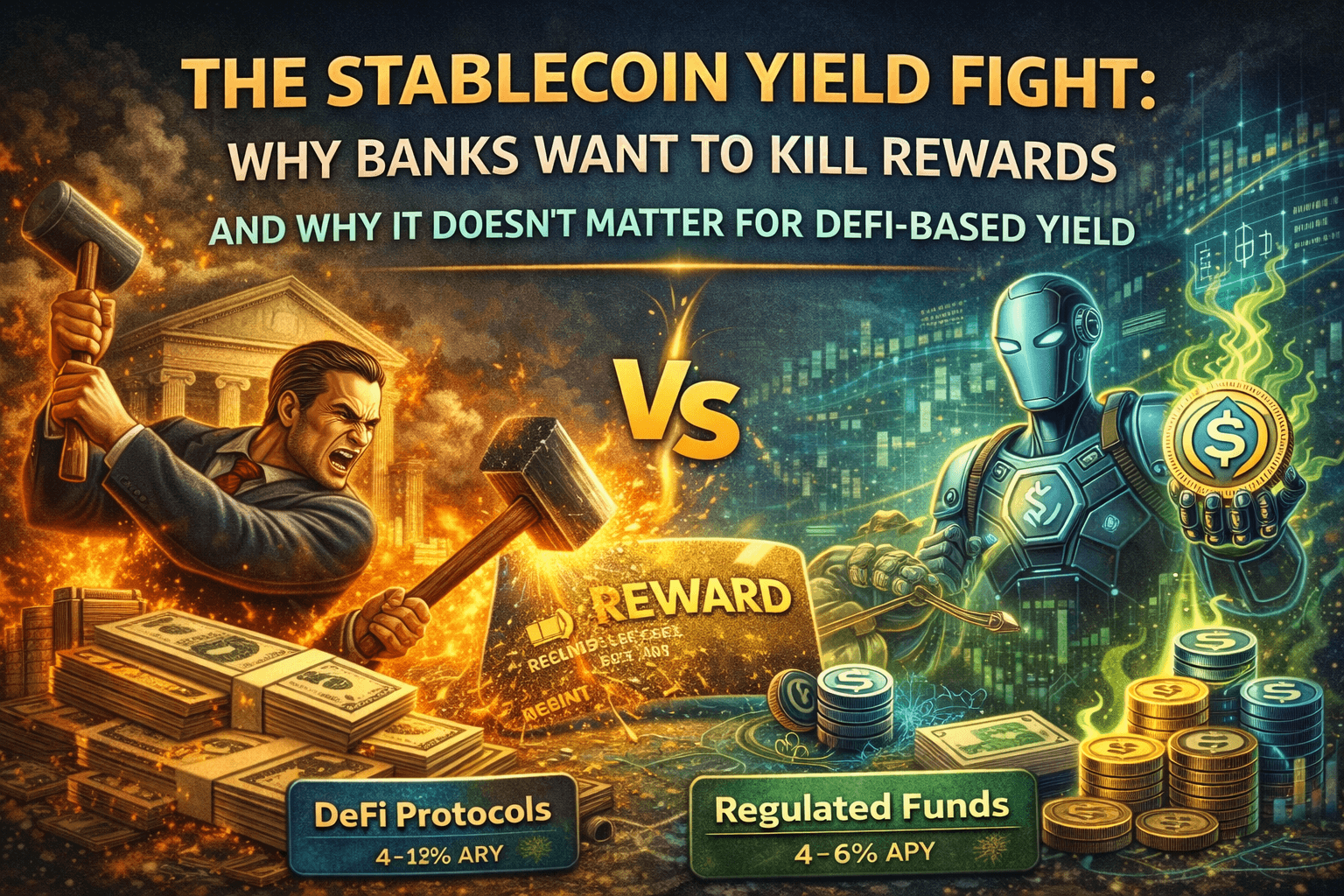
In 2026, stablecoin yields range from 6-9% APY on institutional-grade DeFi protocols. Tokenized money market funds offer 4 to 5 percent. For platforms processing tens of millions monthly, the gap between earning zero and earning 6 percent equals hundreds of thousands in lost annual revenue.
This is not a treasury problem. Treasury management optimizes reserves held for months. This is an operations problem: monetizing capital that moves in hours or days.
What Is Stablecoin Float?
Stablecoin float is operational capital sitting inside payment workflows at any moment:
Pre-settlement float: Customer deposits awaiting settlement, typically 1 to 3 days.
Operational buffers: Capital staged for payouts, often over-provisioned for volume spikes.
FX timing float: Stablecoins held between receipt and conversion.
Escrow holds: Funds held during dispute windows or conditional releases.
This float exists because payment operations require buffers for compliance, liquidity, and risk management. A platform processing $10 million daily might hold $3 to $5 million in float at any moment.
The float cannot disappear without breaking operations. The question is whether it earns during the hold period.
How Much Revenue Is Available?
The math is direct. Multiply average daily stablecoin balance by achievable yield.
At 7 percent APY:
$1 million float = $70,000 annually
$5 million float = $350,000 annually
$10 million float = $700,000 annually
$15 million float = $1.05 million annually
Most cross-border platforms processing $5 million or more daily carry enough float to generate $300,000 to $1 million in additional annual revenue.
Current stablecoin lending rates on Aave and Morpho range from 5 to 10 percent. Tokenized Treasury funds like Franklin Templeton's BENJI offer 4 to 5 percent with regulated structures.
Why Treasury Management Platforms Don't Work for This
Treasury platforms like Kiln and Dfns optimize static capital held for months. Operational float has different requirements:
Liquidity must be instant. Funds need access within minutes. Settlement windows close unpredictably.
Custody cannot change. Most platforms cannot move customer-adjacent funds to third-party custody.
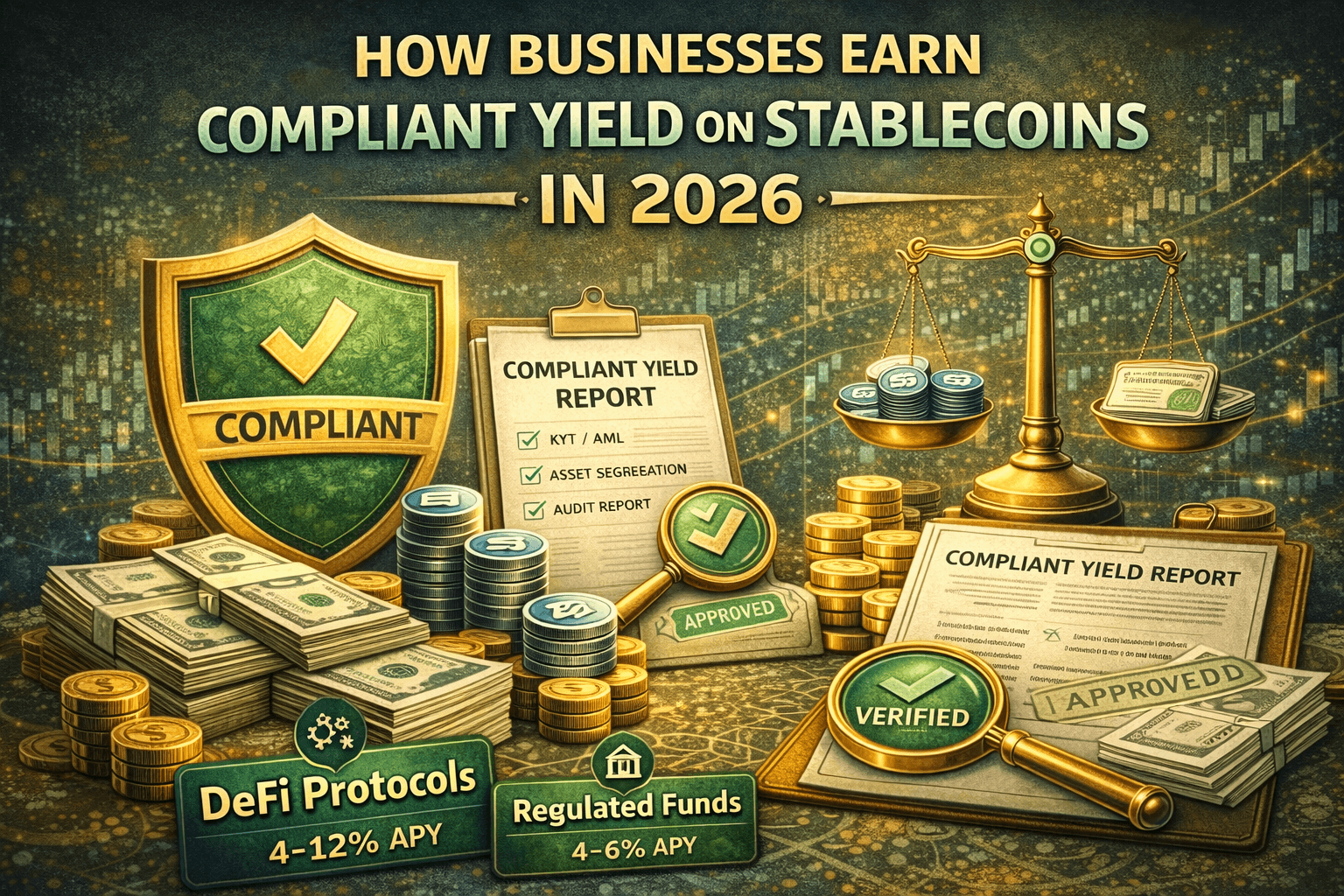
Compliance must be continuous. Funds moving in and out of yield must pass KYT checks at every transition.
Time horizons are hours, not months. Treasury optimization works on 30 to 90 day cycles. Operational float sits for 6 hours to 6 days.
This gap created a new infrastructure category called stablecoin operations: yield, compliance, and automation for capital in motion.
How Float Monetization Works in Practice
The model combines three elements:
Automatic yield deployment. When funds arrive and pass compliance checks, they route to yield positions without manual intervention. Capital earns by default.
Instant liquidity. Yield sources must support withdrawal in under 60 seconds. This rules out staking or locked positions but preserves operational integrity.
Embedded compliance. Every movement passes KYT checks. Tainted flows quarantine automatically. Clean capital maintains provenance through the cycle.
Implementation uses layered wallet architecture:
Layer 1: Receives inbound deposits with KYT screening.
Layer 2: Consolidates and stages capital.
Layer 3: Holds verified clean capital eligible for yield.
Layer 4: Interacts with yield protocols via segregated wallets.
Customer deposits never touch yield positions directly. Returns flow back through compliance gates before reaching payout wallets.
Infrastructure providers like RebelFi have built platforms specifically for this architecture, handling yield routing, compliance gating, and instant liquidity without requiring custom DeFi integrations.
What Infrastructure Is Required?
Three components most platforms lack internally:
Yield protocol integration. Direct connections to lending protocols and money market funds with programmatic deposit and withdrawal APIs.
Compliance orchestration. KYT integrated at the transaction layer, routing funds based on compliance status automatically.
Wallet segregation logic. Smart account architecture enforcing separation between customer operations and treasury yield. Regulators require demonstrable ring-fencing.
Building internally takes 6 to 12 months. Platforms processing $20 million or more monthly face clear ROI: yield on float exceeds infrastructure cost within year one.
When Does This Not Work?
Float optimization has limits:
Hold times under 4 hours. Yield accrued may not justify complexity.
Regulatory prohibition. Some jurisdictions restrict what licensed institutions can do with customer-adjacent funds.
Custody constraints. Omnibus arrangements with limited wallet control may prevent required segregation.
Who Should Implement This?
Highest-priority candidates:
Daily volume exceeds $5 million
Average settlement time exceeds 24 hours
Already stablecoin-native (not primarily fiat)
Mature compliance infrastructure exists
Margin pressure from corridor commoditization
Implementation typically reaches production within 1-2 months using external infrastructure, or 9-15 months building internally.
The Strategic Shift
Traditional thinking: "Should we allocate idle capital to yield?"
Operations-first thinking: "Why would any dollar ever sit idle?"
Platforms treating float yield as margin can fund growth without fundraising. Platforms treating it as cost offset can lower customer fees.
The cross-border market is entering a phase where yield-enabled operations become table stakes. Platforms implementing now capture full margin. Platforms waiting will implement defensively after competitors reprice the market.